

How To Install Rock Climdomain_7 Bolts
In this tutorial, nosotros volition discuss all the steps required to install Android Platform Tools and SDK Managing director on Windows 10. This tutorial provides the steps for Windows 10, though the steps should be the aforementioned on other versions of Windows.
This post is useful for the developers using Android Platform Tools and SDK manager without installing Android Studio for the apply cases including hybrid app development using Ionic. It also assumes that a valid JAVA_HOME environment variable exists pointing to the installation directory of Java.
You tin follow How To Install Java 8 On Windows x, How To Install Java 11 On Windows, How To Install Java xv On Windows, or How To Install OpenJDK 15 On Windows to install Java on Windows. In example you lot are interested in developing Android applications using Android Studio, you can also follow How To Install Android Studio On Windows.
Step i - Download SDK Tools
Open the download tab of Android Studio and scroll down to the Command line tools only section. This section shows various options to download the SDK tools as shown in Fig 1.
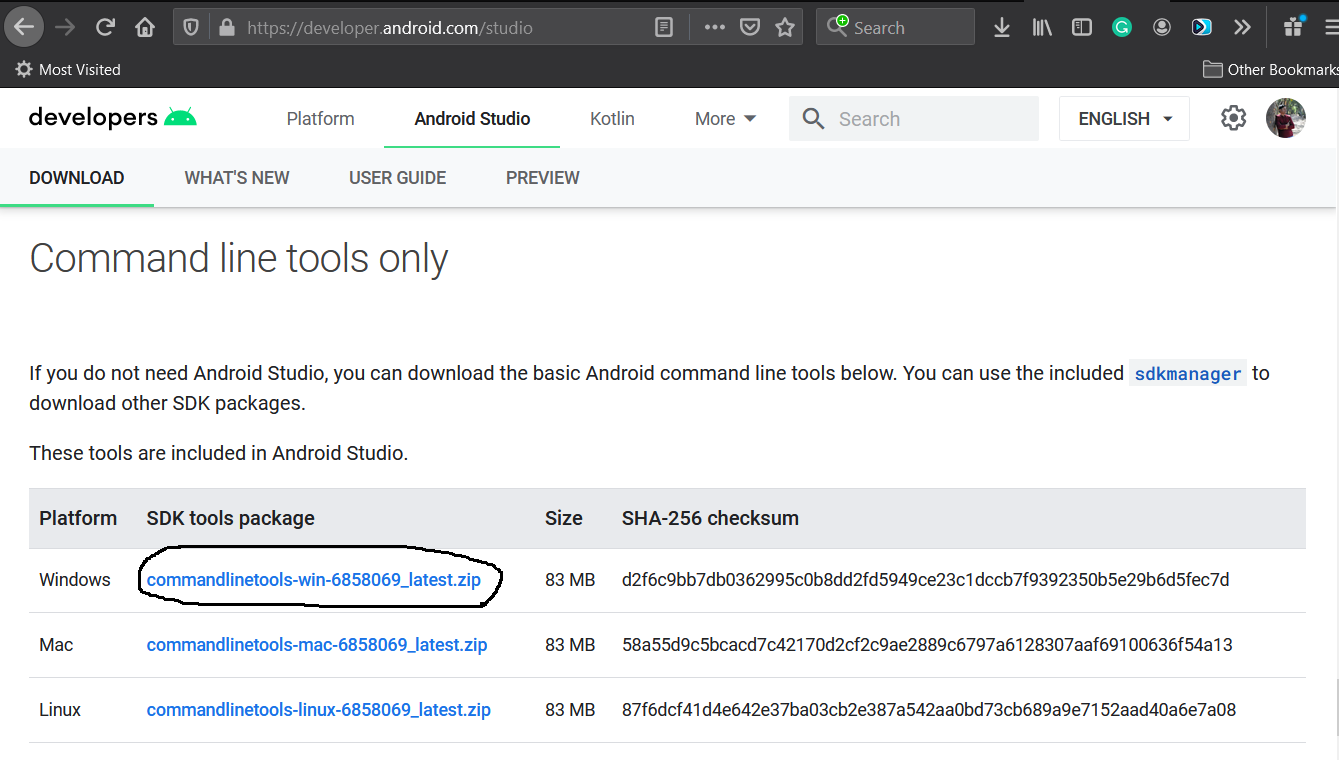
Fig 1
Click the first link having the download option for Windows as highlighted in Fig 1. Information technology will inquire to accept to terms and conditions as shown in Fig 2.
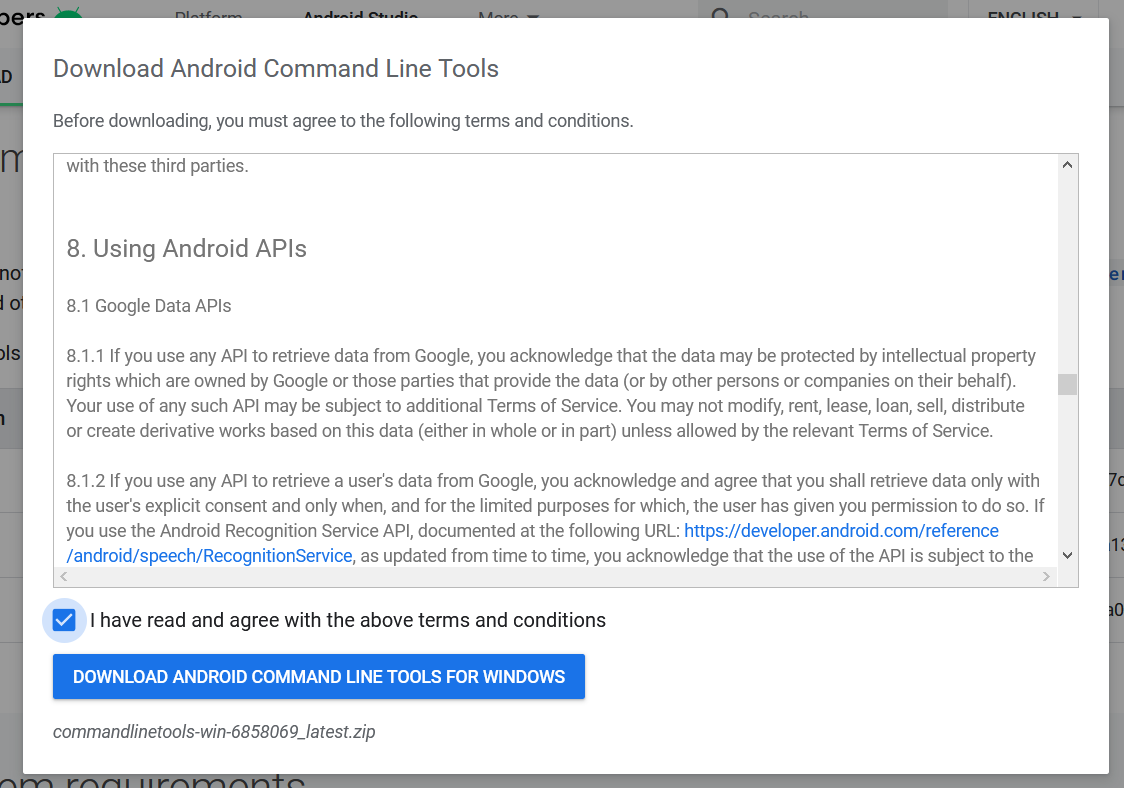
Fig ii
Go through the details, agree on the terms and weather and click the Download Push button to start the download.
Step ii - Install Command Line Tools
In this step, we will install the Android Control Line Tools on Windows 10. Create the directory android-sdk at your preferred location and excerpt the content of the downloaded SDK Tools zip to this directory. Brand sure that the extracted content is available inside the android-sdk directory created by us equally shown in Fig 3.
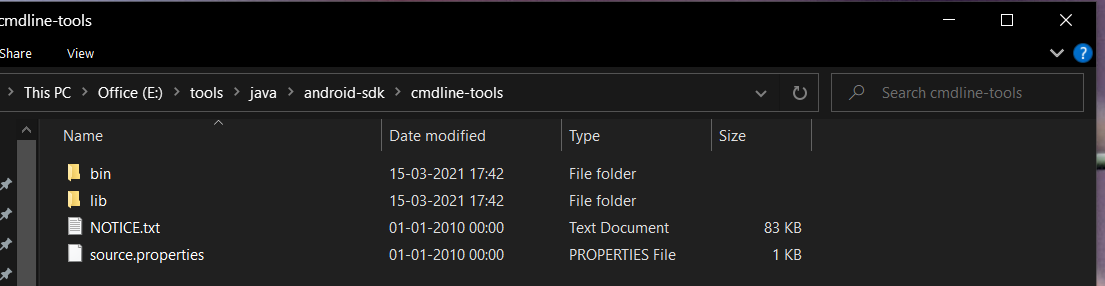
Fig three
Step 3 - Install Platform Tools
In this pace, we will install the Android Platform Tools on Windows 10. Follow the same steps similar to Android SDK Tools to install Android Platform Tools using the download link every bit shown in Fig 4, Fig 5, and Fig half dozen.
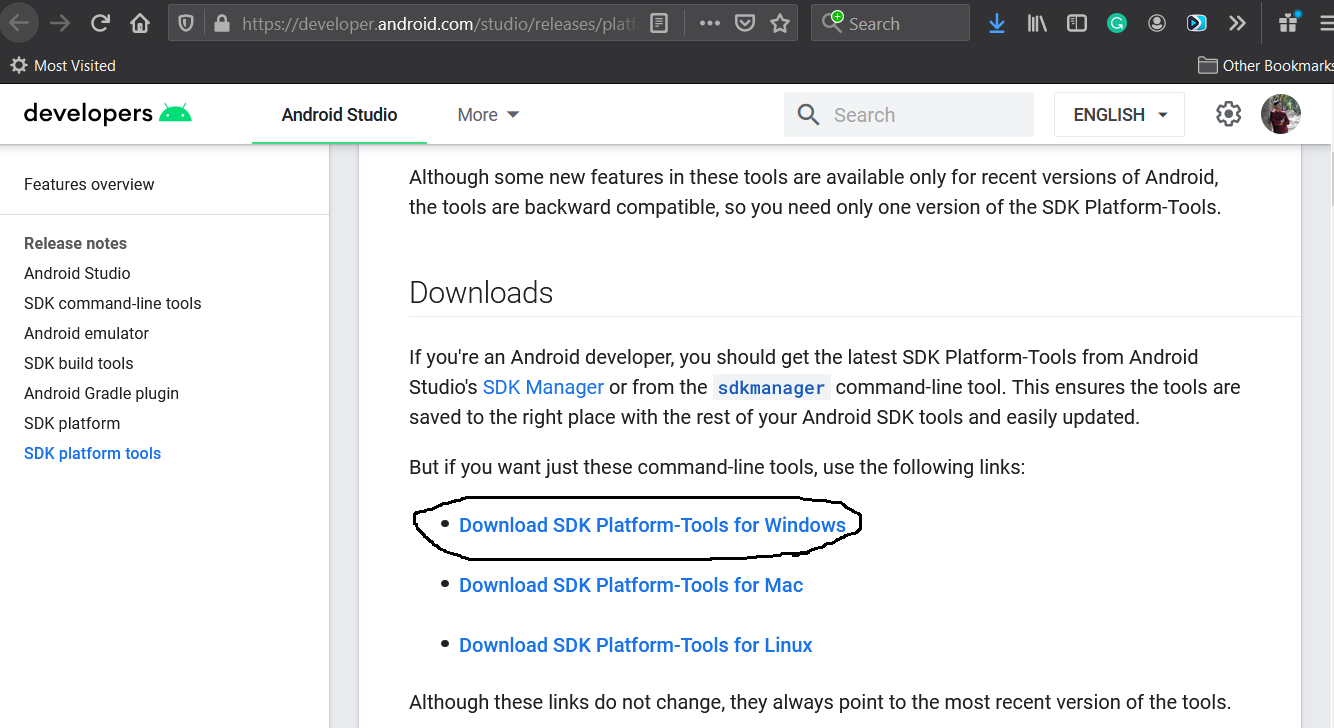
Fig 4
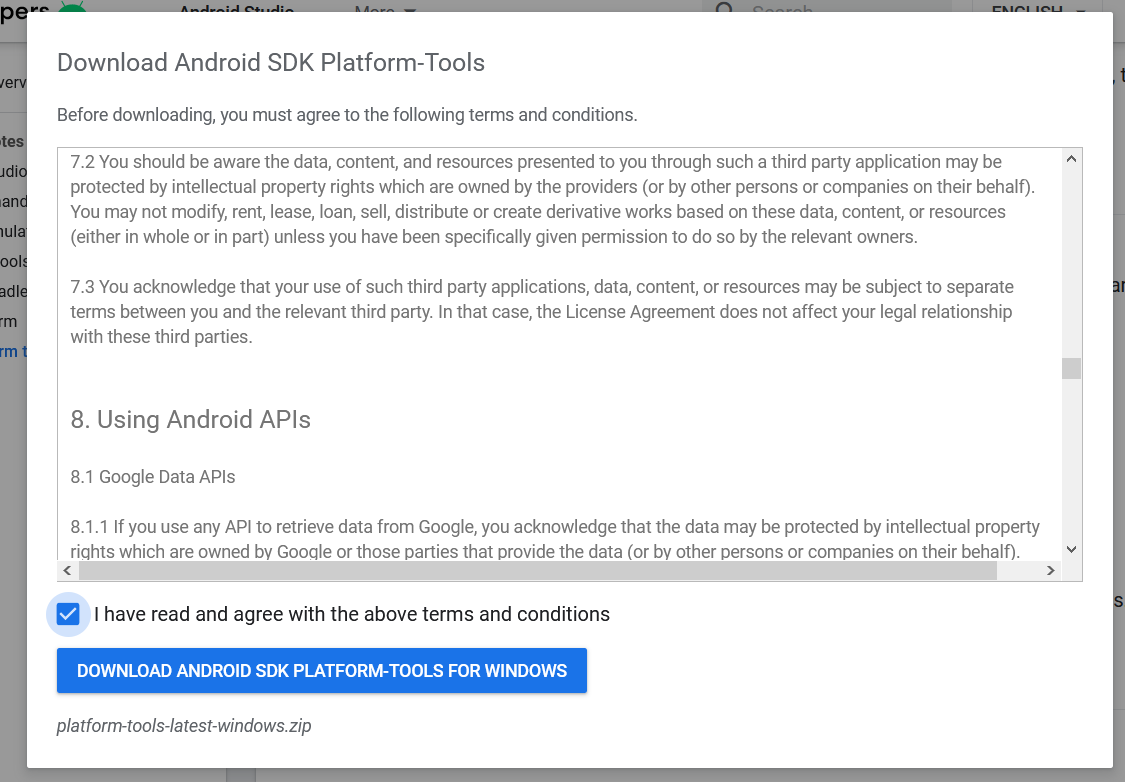
Fig 5
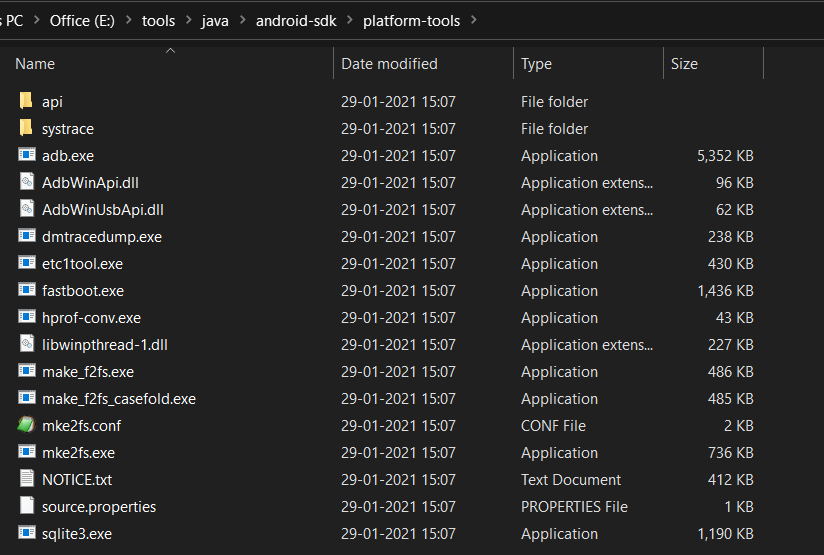
Fig six
Step iv - Configure Environs Variable
Right-click the My Computer or This PC on the desktop and click the Properties Choice. Now click the Advanced system settings. Information technology will bear witness the System Properties dialog having Advanced Tab options every bit shown in Fig 7.
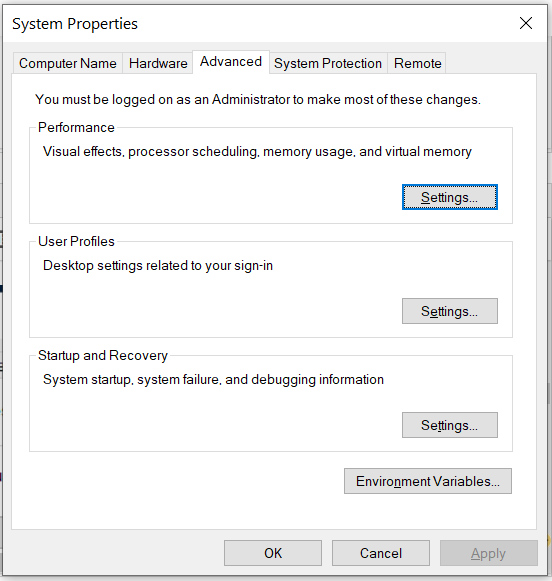
Fig vii
Click the Environment Variables Button and click the New Button in the first section. Set the Variable Proper noun field to ANDROID_HOME and Variable Value to the android-sdk directory created by u.s. in the previous step.
Similarly, also configure the surroundings variable ANDROID_SDK_ROOT to the android-sdk directory.
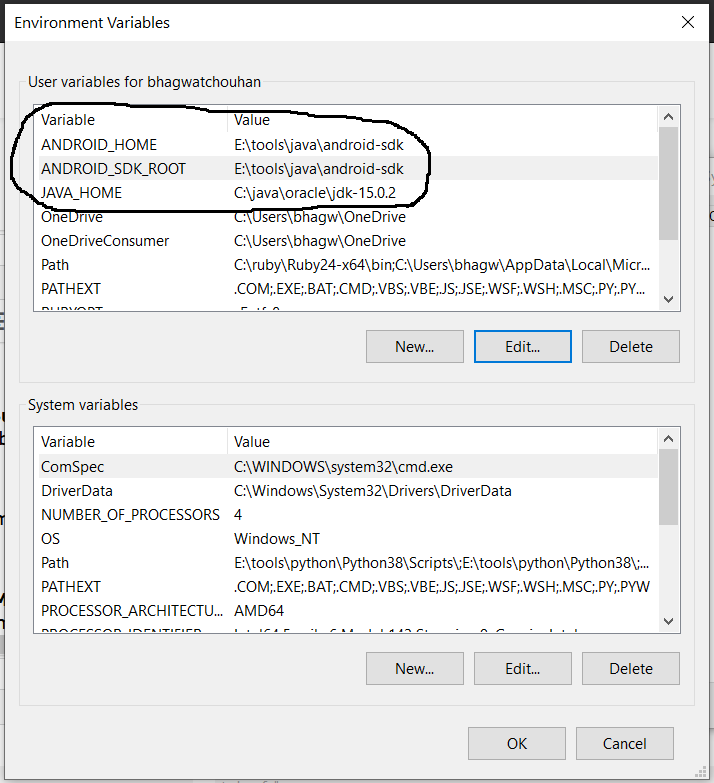
Fig eight
Pace 5 - Configure Commands
In previous steps, we have downloaded and extracted the Control Line Tools and Platform Tools to the android-sdk directory. Both the tools provide several command-line utilities which we demand to run by going to the advisable directory having the executable files.
We can brand these commands available at the organization level without going to these directories past calculation the path to tools, tools\bin, and platform-tools to the arrangement path as shown in Fig 9. Make certain that these executables do not break other commands having the same name before calculation these paths to the PATH environment variable.
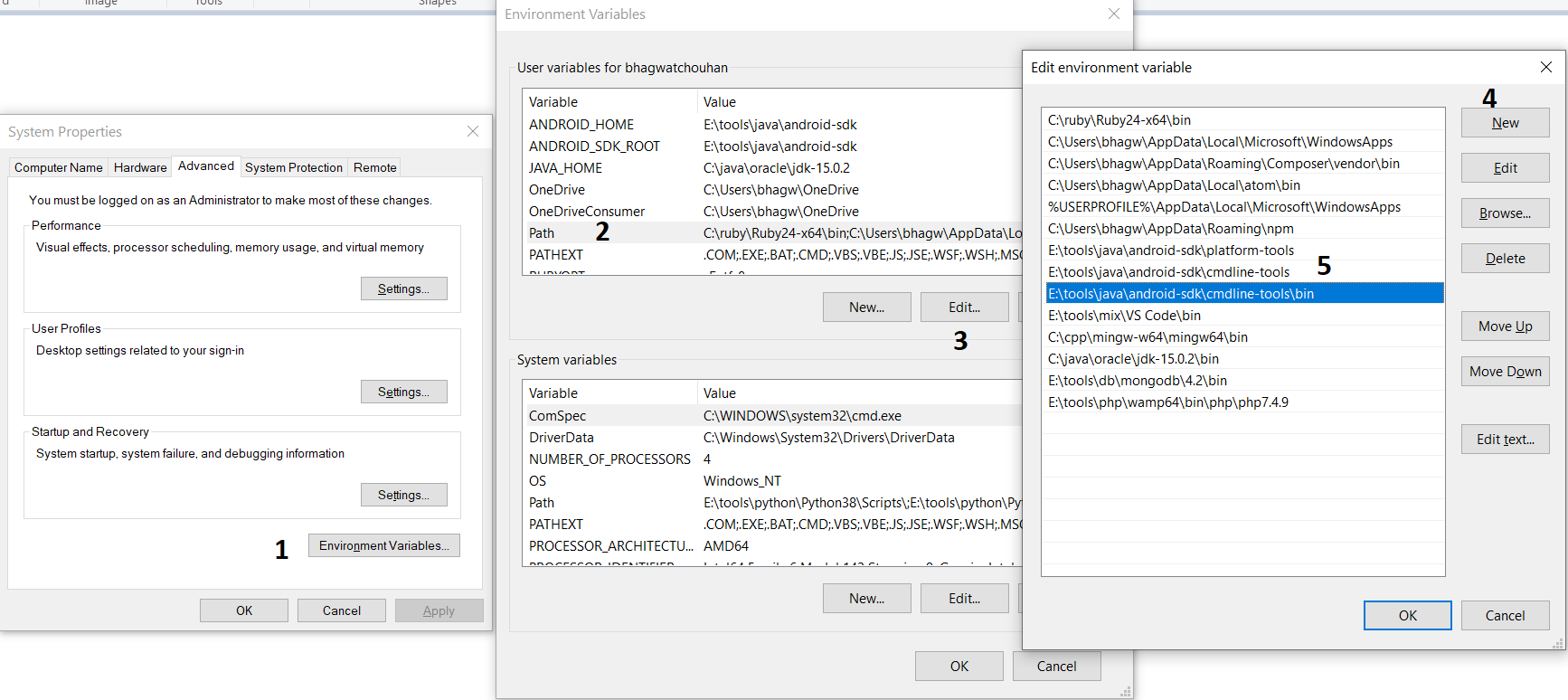
Fig 9
Now open the Command Prompt and check the ADB and SDK Manager versions as shown in Fig ten. You might be required to restart the system to utilise the environs variables gear up by us.
# Cheque adb version
adb --version# It must show the installed adb version
Android Debug Bridge version ane.0.41
Version 31.0.0-7110759
Installed as E:\tools\java\android-sdk\platform-tools\adb.exe# Check sdkmanager version
sdkmanager --version# It will bear witness the error as shown below
Error: Could not determine SDK root.
Error: Either specify it explicitly with --sdk_root= or movement this package into its expected location: <sdk>\cmdline-tools\latest\
We can see that the ADB command works well and shows the version details, but the sdkmanager shows an error - "error: could not determine sdk root. error: either specify it explicitly with --sdk_root= or move this package into its expected location: <sdk>\cmdline-tools\latest\" since it expects the Command Line Tools in a version-specific directory. Now open up the source.properties file from the cmdline-tools directory to check the version. It volition testify the version details equally shown below.
Pkg.Revision=3.0
Pkg.Path=cmdline-tools;3.0
Pkg.Desc=Android SDK Command-line Tools
At present move all the files to the directory cmdline-tools/iii.0 as shown in Fig x.
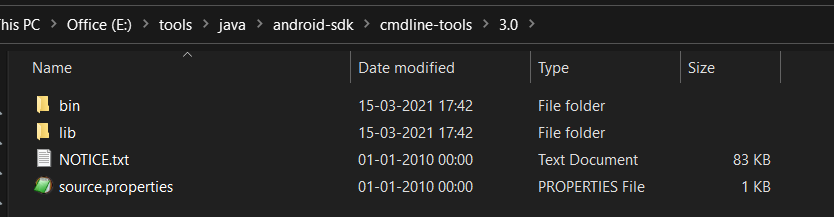
Fig 10
Also, update the system path as shown in Fig eleven.
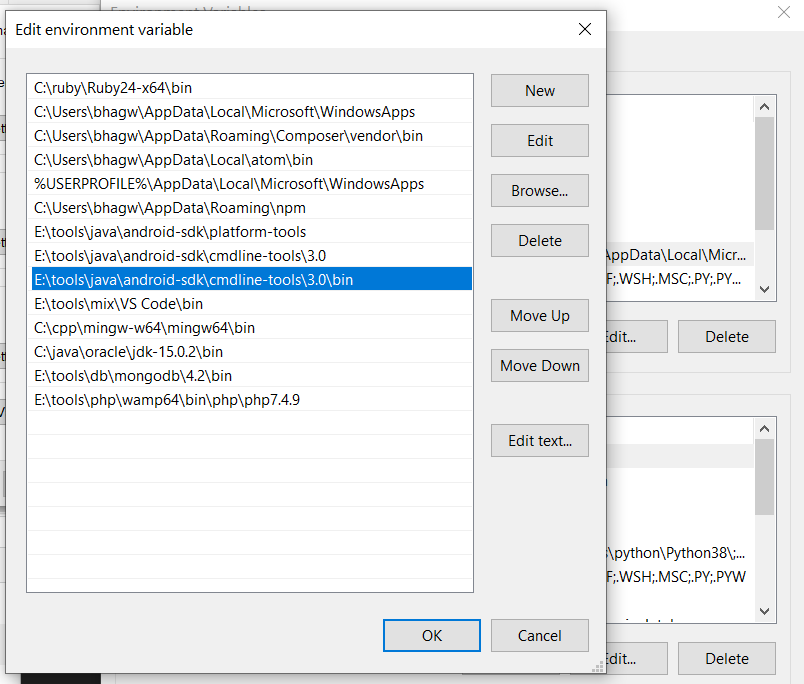
Fig 11
Now close and open the Command Prompt. Also, check the ADB and SDK Manager versions every bit shown in Fig 12.
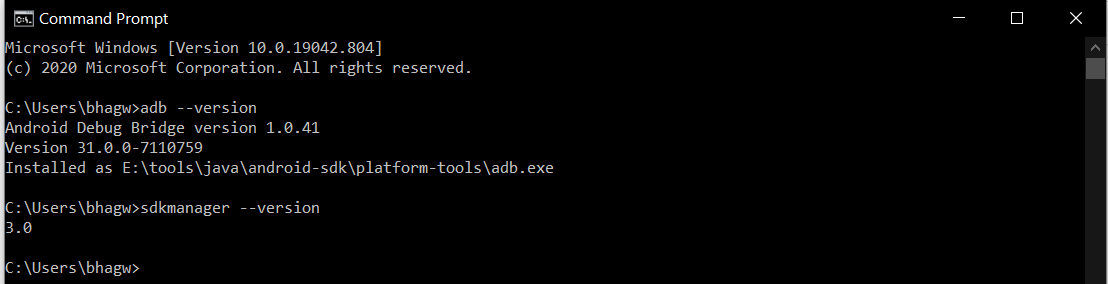
Fig 12
Step half-dozen - Using the SDK Manager
List - We can list the installed and available packages and images using the list command equally shown beneath.
// Listing all the installed and available platforms, system images and other resources
sdkmanager --list// Output should expect like
Installed packages:=====================] 100% Calculating updates...
Path | Version | Description | Location
------- | ------- | ------- | -------
platform-tools | 31.0.0 | Android SDK Platform-Tools 31 | platform-tools\Available Packages:
Path | Version | Description
------- | ------- | -------
add together-ons;addon-google_apis-google-15 | iii | Google APIs
...
...// We can meet that it shows the tools and platform-tools installed past united states
Install Platform - Use the beneath-mentioned command to install the Android 10 (API level 30) using the SDK manager.
# Get to the SDK Tools bin directory to admission sdkmanager
# Start download the most recent package
sdkmanager "platforms;android-xxx"
It will inquire to accept the terms and conditions as shown in Fig thirteen. Enter y and hit Enter Key to accept the terms and atmospheric condition. This command creates the directory platforms within android-sdk and installs the package android-30 having all the required files to run the emulator for Android 10.
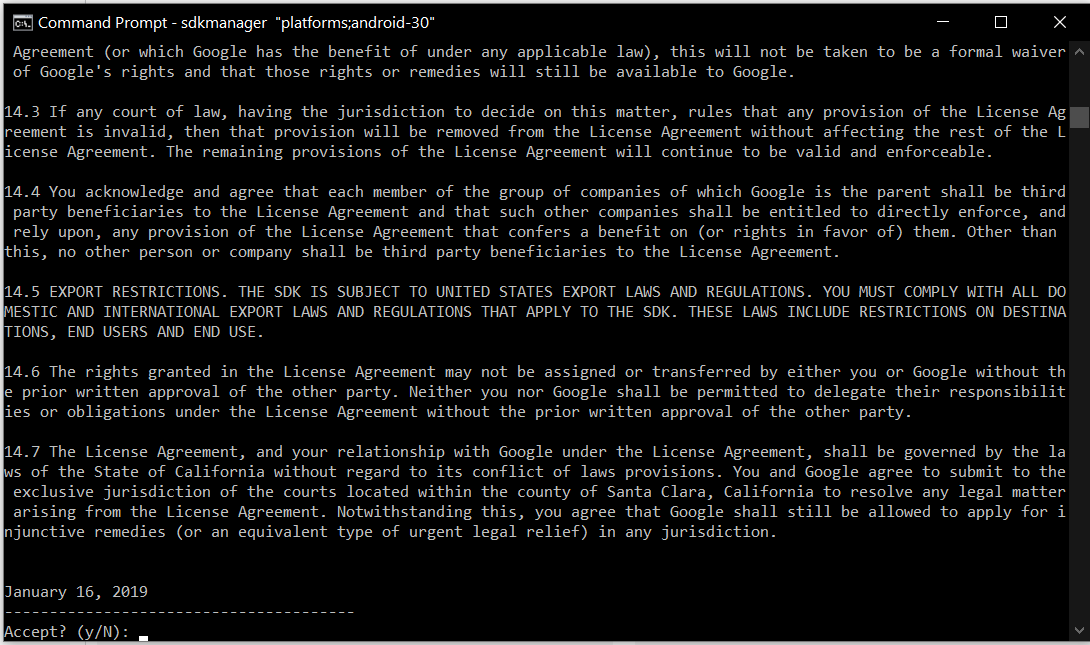
Fig xiii
If we again check the installed packages, the list control shows the installed options as shown below.
sdkmanager --list
Installed packages:=====================] 100% Computing updates...
          Path                 | Version | Clarification                   | Location
          -------              | ------- | -------                       | -------
          platform-tools       | 31.0.0  | Android SDK Platform-Tools 31 | platform-tools\
          platforms;android-thirty | iii       | Android SDK Platform xxx       | platforms\android-30\Available Packages:
            Path                                                                                     | Version      | Description
            -------                                                                                  | -------      | -------
            add together-ons;addon-google_apis-google-15                                                      | 3            | Google APIs
            add-ons;addon-google_apis-google-16                                                      | 4            | Google APIs
...
...
Update SDK Managing director - Update the SDK manager using the beneath-mentioned command.
sdkmanager -- update Add together Organization Image - Nosotros can add organisation images from available images shown past the list command using the SDK manager every bit shown below. We are adding the most recent default 64-bit system image.
// Install default system paradigm for platform android-30
sdkmanager "organization-images;android-30;google_apis;x86_64"
Accept the License Understanding to complete the download.
At that place are several projects which need Google Play Services. We demand organisation images specific to Google Play Services as shown below.
// Install Google Play Services system epitome
sdkmanager "system-images;android-30;google_apis_playstore;x86_64"
Accept the License Agreement to consummate the download.
Install Emulator - We need to install the emulator before creating the AVD using SDK Manager.
// Install Emulator
sdkmanager --channel=3 emulator
Take the License Agreement to consummate the download.
Install Build Tools - Install the about recent build tool listed by
// Install Build Tools
sdkmanager "<build tools version>"// Example
sdkmanager "build-tools;xxx.0.3"
Footstep vii - Using the Emulator and AVD Director
Create Android Emulator - Create the emulator using the system paradigm downloaded in the previous step equally shown below. Replace <emulator name> with the actual name preferred by you.
// Create the emulator using default organization epitome
avdmanager create avd -northward <emulator proper noun> -k "system-images;android-thirty;google_apis;x86_64" -one thousand "google_apis"// Instance:
avdmanager create avd -n emulator30 -m "system-images;android-30;google_apis;x86_64" -g "google_apis"// Create emulator using Google Play Services system image
avdmanager create avd -n <emulator proper noun> -thousand "system-images;android-xxx;google_apis_playstore;x86_64"// Example:
avdmanager create avd -due north emulator30ps -k "organisation-images;android-30;google_apis_playstore;x86_64"
The to a higher place commands enquire a agglomeration of questions to configure the AVD if we choose the custom hardware profile option. We have excluded the details of these options from this tutorial since these configuration details depend on the bodily needs. Later completing all the configurations, it creates the AVD using the name provided past united states of america while configuring information technology.
Similarly, we tin can also install the AVD of older versions as shown below.
// Create the emulator using default system paradigm
avdmanager create avd -due north <emulator proper name> -thou "arrangement-images;android-29;default;x86_64" -g "default"// Case:
avdmanager create avd -northward emulator29 -k "arrangement-images;android-29;default;x86_64" -g "default"// Create emulator using Google Play Services organization image
avdmanager create avd -n <emulator proper name> -k "system-images;android-29;google_apis_playstore;x86_64"// Example:
avdmanager create avd -northward emulator29ps -k "system-images;android-29;google_apis_playstore;x86_64"
Listing Android Emulators - Now go to the tools directory on the command line and check the installed platform every bit shown beneath.
Notes: Add Emulator to the system path equally shown in Fig 14.
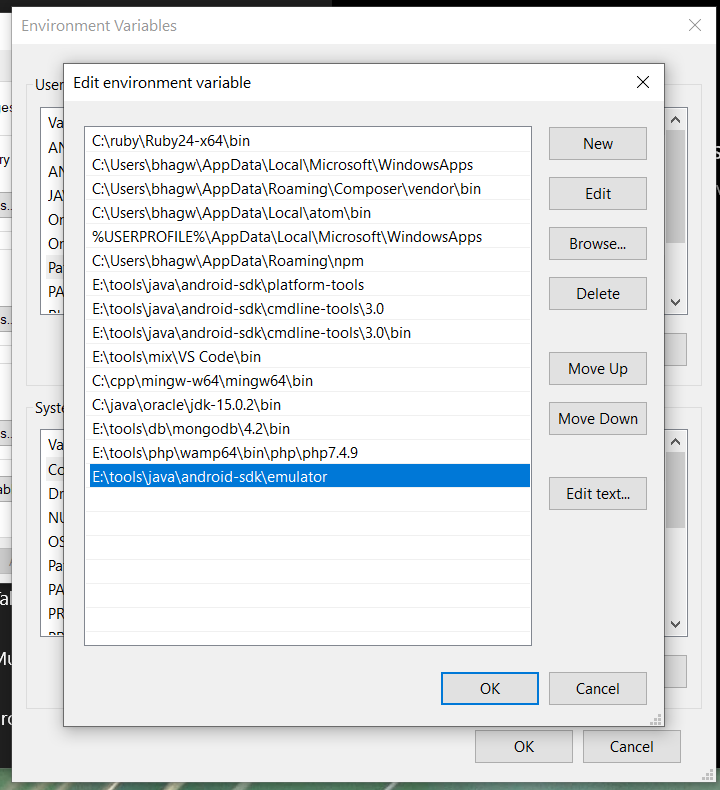
Fig xiv
Close and re-open up the Control Prompt to check the AVDs created by usa in the previous steps.
// List the available emulators
emulator -list-avds// Output
default28
emulator30
emulator30ps
Information technology will listing all the AVDs installed past us.
Run Emulator - We tin can run the emulator created past the states as shown below.
// Run Emulator
emulator -avd          <emulator name>// Case          emulator -avd          emulator30
The emulator will have some time to completely launch the AVD. The concluding results should look similar to Fig fifteen.
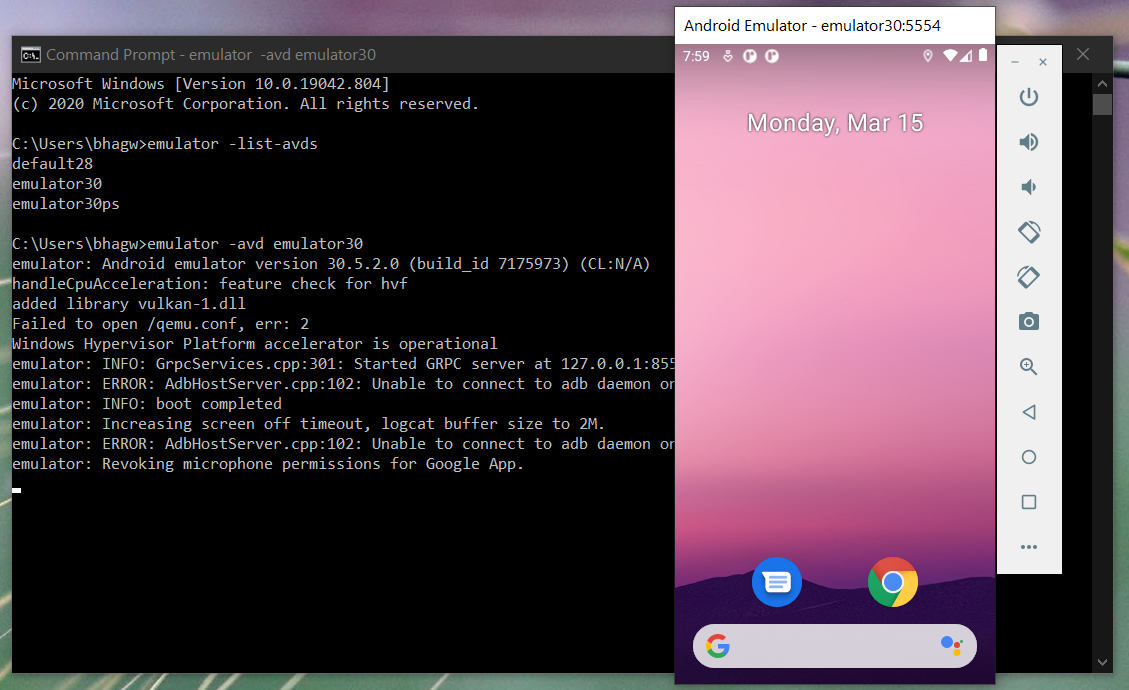
Fig xv
Delete Emulator - We can likewise delete an existing emulator equally shown below.
// Delete Emulator
avdmanager delete avd -n <emulator name>
Summary
This tutorial provided all the steps required to install Android Platform Tools and Android SDK Managing director on Windows x. Information technology also provided the steps required to create and launch the AVDs using the Emulator.

Source: https://android.tutorials24x7.com/blog/how-to-install-android-sdk-tools-on-windows
Posted by: heardarithe.blogspot.com
0 Response to "How To Install Rock Climdomain_7 Bolts"
Post a Comment